The Deadlift: Why It Matters — and What to Avoid
Few exercises build real-world strength as effectively as the deadlift.
At its core, the deadlift trains one of the most fundamental human movement patterns: picking something up off the ground safely and efficiently. That simple action has major implications for strength, injury prevention, and long-term physical resilience.
The deadlift is not just a lower-body lift. It is a full-body movement that requires coordination, stability, and controlled force production.
What the Deadlift Trains
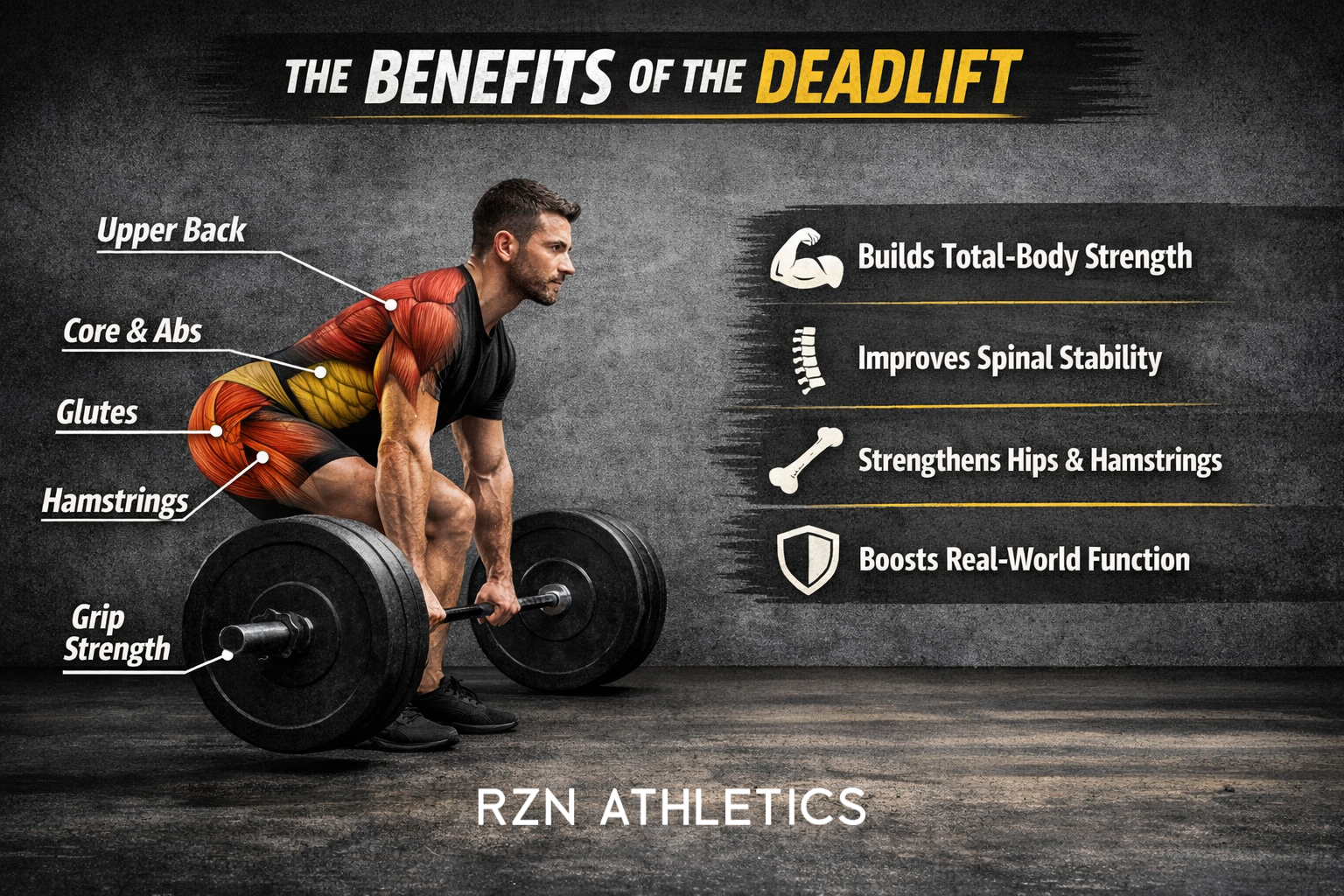
The deadlift primarily strengthens the posterior chain — the muscles along the back of the body — including:
Glutes
Hamstrings
Lower back
Upper back
Core stabilizers
It also challenges grip strength and shoulder stability.
Because it involves multiple large muscle groups working together, the deadlift allows you to train heavy loads efficiently. This makes it one of the most effective movements for building total-body strength.
The Hip Hinge: Why It’s So Important
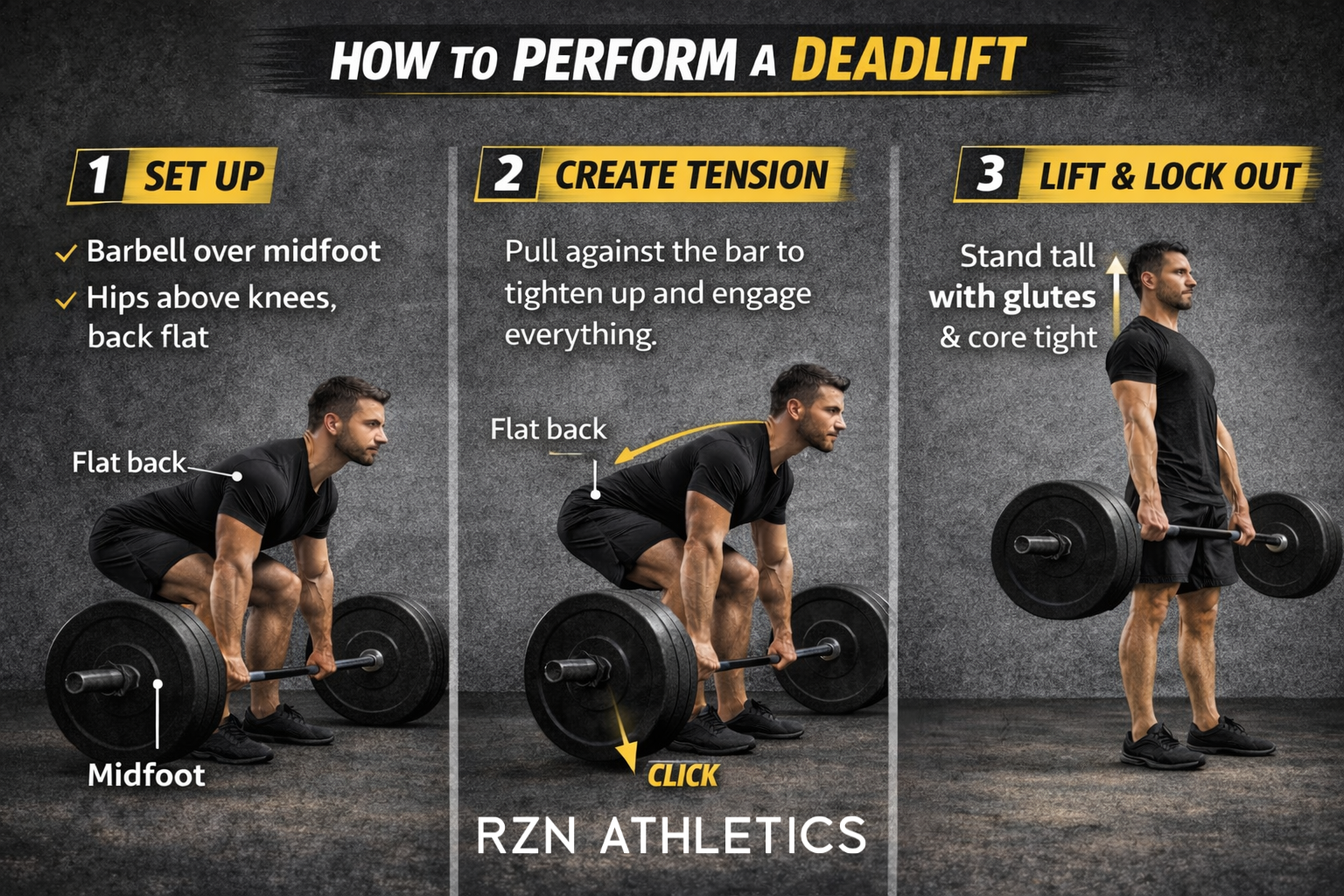
The deadlift reinforces the hip hinge — the ability to bend at the hips while maintaining a stable spine.
Many people lack strength and control in this pattern. As a result, they compensate by rounding the lower back or overusing the knees when lifting objects in daily life.
When performed correctly, the deadlift teaches the body to:
Generate force through the hips
Maintain spinal stability under load
Distribute stress across large muscle groups instead of small joints
This carries over directly to everyday tasks, from lifting groceries to moving furniture.
Common Deadlift Mistakes
While the deadlift is powerful, its effectiveness depends on proper execution. Here are some of the most common errors and why they matter.
1. Rounding the Lower Back
Excessive spinal flexion under load increases strain on passive structures rather than allowing the hips and hamstrings to do the work.
A neutral spine and strong brace help distribute force appropriately.
2. Squatting the Deadlift
The deadlift is a hinge, not a squat. Dropping the hips too low turns the movement into something closer to a squat and reduces tension in the posterior chain.
The hips should sit higher than in a squat, with the shins relatively vertical.
3. Letting the Bar Drift Away
When the bar moves away from the body, leverage worsens and stress increases on the lower back.
Keeping the bar close to the legs improves efficiency and control.
4. Jerking the Weight Off the Floor
Pulling aggressively without building tension first can compromise position and increase injury risk.
A better approach is to “pull the slack out” of the bar — creating full-body tension before initiating the lift.
5. Overextending at the Top
Lockout does not require leaning backward. Overextending the spine at the top places unnecessary stress on the lower back.
Standing tall with glutes engaged is sufficient.
Why Technique Matters
The goal of the deadlift is not simply to move weight. It is to build strength in a safe and repeatable way.
Good technique allows you to:
Load the posterior chain effectively
Reduce unnecessary joint stress
Progress consistently over time
When mechanics are sound, the deadlift becomes a tool for resilience rather than a risk.
🎥 Watch the Demo
We’ve posted a short video demonstrating proper deadlift setup and key coaching cues.
If you’re working on your form, this is a great visual reference.
👉 Watch it here:
https://www.youtube.com/shorts/esO3I4qrNbI
The Bigger Picture
The deadlift builds more than muscle. It develops strength in a foundational movement pattern that supports daily life and athletic performance.
When trained consistently and executed correctly, it improves:
Hip strength
Spinal stability
Grip capacity
Overall force production
The key is not just lifting heavy. It’s lifting well.